Last Updated on February 27, 2026 by Tom
Tire rotation helps extend tread life, protect traction, and support stable handling. Front and rear tires wear at different rates due to steering forces, braking loads, and drivetrain design. Moving tires between positions evens out that wear so sets last longer and perform better over time.
Drivers often search how often to rotate tires, how often should you rotate your tires, or when you should rotate your tires because uneven wear leads to noise, vibration, and early replacement. A clear schedule prevents those problems and reduces long run costs.
This article explains what a tire rotation involves, when to rotate tires, how to rotate tires at home, and how much a tire rotation usually costs.
What is a Tire Rotation?
A tire rotation means moving tires from one wheel position to another so wear stays even across the full set. Front tires often lose tread faster due to steering and braking forces, while rear tires face different loads during acceleration. Swapping positions helps each tire share those stresses rather than taking all the damage in one spot.
Rotation does more than extend tread life. It supports steady grip, smoother rides, and balanced braking response across corners and straight roads.
Key results of proper tire rotation include:
- longer tread life across all four tires
- reduced road noise and vibration
- steadier traction during rain or sharp stops
- more predictable handling
How Often Should You Rotate Your Tires?
Most vehicles benefit from regular tire rotation at set mileage intervals rather than waiting for uneven wear to appear. A steady schedule protects tread depth, ride quality, and long term value.
Many car manuals suggest rotation every 5,000 to 8,000 miles, though exact timing depends on drivetrain type, tire design, and road conditions. Heavy loads, frequent city travel, or rough pavement can shorten that window.
Factors that influence how often should you rotate your tires include:
- front wheel, rear wheel, or all wheel drive layouts
- performance focused tread compounds
- daily mileage totals
- road quality and climate
- alignment condition
Checking tread depth at each oil change helps confirm when you should rotate your tires so wear stays even and noise remains low.
When to Rotate Tires Based on Wear Signs?
Mileage schedules help, yet visible wear patterns often signal the need for rotation sooner. Quick inspections catch early problems before tread loss becomes severe.
Look for these clues when deciding when to rotate tires:
- Uneven shoulder wear on one edge of the tread
- Feathered ridges that feel rough when a hand runs across the surface
- Cupped patches that create humming sounds at speed
- Steering pull during straight travel
- Vibration that rises with road speed
Measure tread depth across multiple points on each tire. Large differences between front and rear positions usually point to rotation needs rather than full replacement.
How to Rotate Tires at Home?
Rotating tires at home saves money and helps drivers spot early damage. Safety comes first, so use proper tools and follow each step with care.
Gather the Right Equipment
A floor jack, jack stands, wheel chocks, lug wrench, and torque wrench keep the process controlled. Gloves and a pressure gauge also help.
Secure the Vehicle
Park on flat pavement, set the parking brake, and block the wheels that stay on the ground. Loosen lug nuts slightly before lifting the car.
Lift and Remove Wheels
Place the jack at approved lift points, raise one end at a time, and support the car with stands before wheel removal.
Follow the Correct Rotation Pattern
Move tires to new positions based on drivetrain and tread direction. Tighten lug nuts by hand first, then torque them to factory specs.
Check Pressure and Test Drive
Adjust air levels to match door placard numbers, then take a short drive to confirm smooth rides and stable steering.
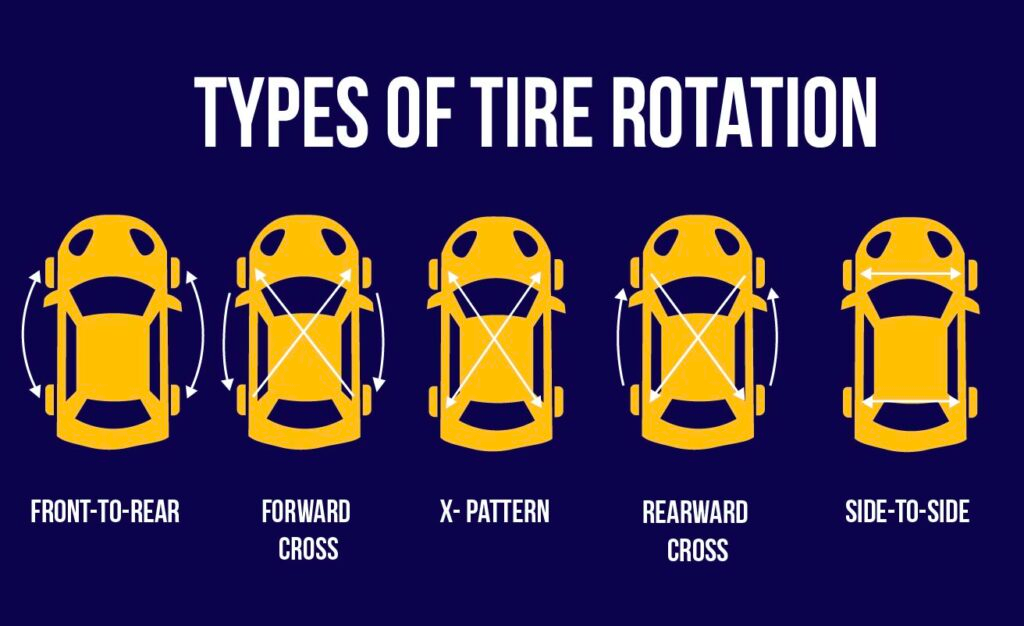
Common Tire Rotation Patterns
Different vehicles and tire designs call for specific rotation paths. Using the right pattern keeps tread wear even and protects handling balance.
Front to Rear Pattern
Moves front tires straight back and rear tires forward to the same side. This fits vehicles with directional tread designs or staggered wheel setups.
Cross Pattern
Front tires move to opposite rear positions, while rear tires shift forward to the opposite side. This works well for most non directional tire sets.
X Pattern
Front tires swap to the opposite rear corners, and rear tires cross to the front. This approach helps equalize wear on front wheel drive vehicles.
Directional Tire Pattern
Directional tires move front to back on the same side only. Arrows on the sidewall show correct roll direction.
Staggered Setup Pattern
Different front and rear sizes restrict swaps. Rotation stays limited to side to side movement if tread design allows.

How Much Is a Tire Rotation?
Cost often shapes service decisions, especially for routine maintenance. Prices vary based on location, shop type, and vehicle size, yet most drivers find rotation remains affordable compared with early tire replacement.
Many service centers charge between $20 and $50 for a standard rotation. Some dealers and tire retailers include free rotations with new tire purchases or maintenance plans. Membership programs and service bundles also reduce long run costs.
Factors that affect how much does a tire rotation cost include:
- wheel size and tire weight
- truck or SUV layouts
- shop labor rates
- bundled inspections
- TPMS reset needs
What Affects Tire Rotation Cost?
Several details influence how much is a tire rotation at a given shop. Knowing these factors helps drivers plan service visits and avoid surprise charges.
Vehicle Size and Weight
Large trucks and SUVs require extra lift time and heavier handling, which raises labor rates compared with compact cars.
Tire and Wheel Design
Oversized wheels, low profile tires, or run flat designs take longer to remove and remount.
Shop Type
Dealers, independent garages, and tire chains follow different pricing models. Some include inspections or pressure checks at no added cost.
Extra Services
Alignment checks, balance work, or brake inspections sometimes appear as add ons during rotation visits.
Sensor Resets
TPMS systems may require recalibration after rotation, which adds small fees at some locations.
Professional Service Versus DIY Rotation
Both shop visits and home rotation work well when done correctly. The right choice depends on tools, time, experience, and safety comfort levels.
| Factor | Professional Service | DIY Rotation |
|---|---|---|
| Cost | Usually $20 to $50 unless part of a service plan | Low after tool purchase |
| Time Required | About 20 to 40 minutes | Around 45 to 90 minutes |
| Safety Level | Trained staff and shop lifts | Depends on jack stands and setup |
| Equipment Needs | Shop provides lifts and torque tools | Jack, stands, torque wrench required |
| Warranty Impact | Keeps service records for claims | Records depend on owner logs |
| Inspection Access | Brake and suspension checks included | Visual checks only |
| Skill Level | No mechanical experience needed | Moderate vehicle knowledge helpful |
| Convenience | Drop off service and waiting rooms | Home driveway work |
Mistakes to Avoid During Tire Rotation
Small errors during rotation shorten tire life and affect ride quality. Avoid these common problems to keep results consistent and safe.
Using the Wrong Pattern
Incorrect swaps cause uneven tread wear and steering pull. Always match the rotation path to drivetrain type and tread design.
Skipping Torque Checks
Loose or over tightened lug nuts damage wheels and studs. A torque wrench keeps pressure within factory limits.
Forgetting Pressure Adjustments
Air levels change after rotation. Reset each tire to door placard numbers before driving.
Ignoring Visible Damage
Cracks, bulges, or nails require repair before rotation continues.
Failing to Reset TPMS
Warning lights may stay active if sensors fail to recalibrate after tire movement.
Tire Rotation Checklist
A simple checklist keeps service visits organized and prevents missed steps that shorten tire life or affect safety.
Log Mileage
Record odometer readings at each rotation so the next service stays on schedule.
Measure Tread Depth
Check several spots across each tire to confirm even wear after rotation.
Adjust Tire Pressure
Set air levels to factory numbers listed on the door placard.
Verify Lug Nut Torque
Use a torque wrench to confirm each nut meets spec after the wheels return to the ground.
Reset TPMS
Follow vehicle steps or use a scan tool so dashboard alerts stay accurate.
Final Thoughts on When to Rotate Your Tires
Keeping tire rotation on a steady schedule helps protect tread life, road grip, and ride quality. Whether you follow mileage markers or watch wear signs, regular swaps keep performance steady and reduce early replacement cost. Rotation paired with pressure checks and visual inspections prevents uneven wear patterns that lead to noise, vibration, and traction loss.
Good rotation habits also support more balanced tire ratings when you compare options on sites like PickYourTires. That site offers clear tire reviews and tire comparison tools that help drivers match tire sets with driving patterns and road conditions. Checking rotation history along with tire traction data gives a fuller picture of overall tire health.
Routine care makes tires last longer and travel feels safer. Apply the rotation steps you reviewed here so each set performs closer to its design limits over life.