Last Updated on February 27, 2026 by Tom
Choosing between summer tires vs all season tires means deciding how much performance you expect once temperatures rise. Heat changes how rubber reacts to pavement. As the road surface warms up, grip levels shift, braking distances vary, and steering feel becomes more noticeable.
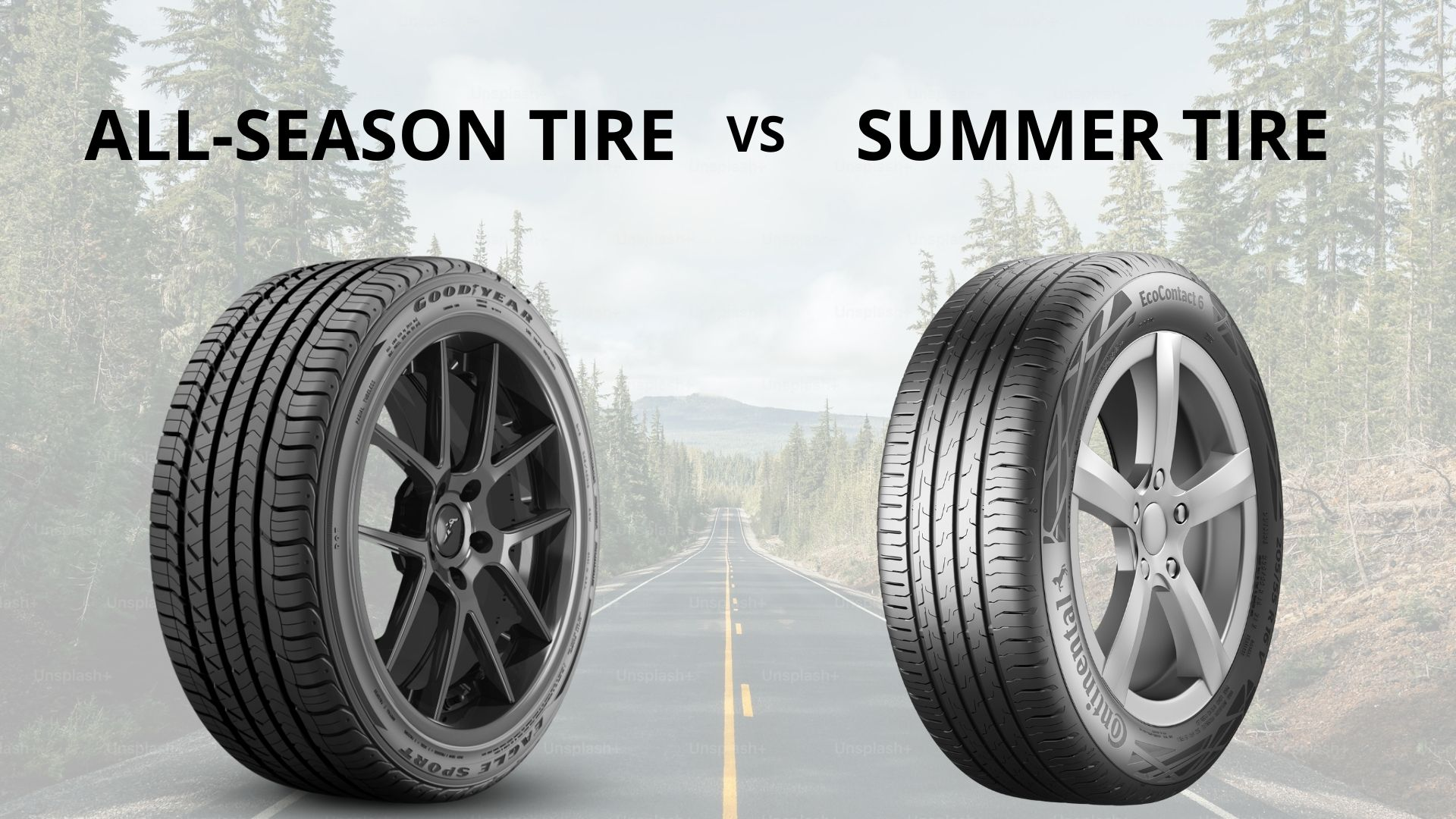
All season vs summer tires is not simply a seasonal label. It reflects two different design priorities. One aims for year-round balance. The other focuses on warm-weather traction and sharper response.
Drivers often notice the difference during quick lane changes, tight curves, or sudden stops on hot pavement. The tire compound and tread pattern determine how stable the vehicle feels under pressure.
Summer Tires vs All Season – What Sets Them Apart?
The difference between summer tires vs all season tires starts with rubber chemistry and tread structure.
Summer tires use a compound that remains soft and flexible in warm conditions. That flexibility increases road contact, which improves dry grip and steering precision. Larger shoulder blocks support cornering stability, and fewer small grooves allow more rubber to meet the pavement.
All season tires use a firmer compound built to tolerate both moderate heat and cooler temperatures. Their tread pattern includes more sipes to handle light snow and wet roads. This design supports versatility, though it slightly reduces dry grip compared to summer-focused rubber.
Here is a side-by-side comparison.
| Category | Summer Tires | All Season Tires |
|---|---|---|
| Primary Focus | Warm weather traction | Year-round balance |
| Dry Pavement Grip | Strong and precise | Stable but less aggressive |
| Wet Performance | Strong in warm rain | Consistent across conditions |
| Cold Weather Use | Loses grip below 45°F | Maintains moderate traction |
| Tread Design | Larger shoulder blocks | More grooves and siping |
| Wear Rate | Faster wear | Longer lifespan |
Summer tires vs all-season reveals a clear trade-off. Summer tires deliver sharper handling when temperatures stay high. All season tires deliver reliability across changing weather without seasonal tire swaps.
Where All-Season Tires Hold Their Own
All season tires remain the default choice for most vehicles leaving the dealership. That decision reflects practicality rather than performance limits. For drivers who value consistency across changing weather, summer tires vs all season often tilts toward all-season convenience.
These tires balance comfort, fuel efficiency, tread life, and moderate traction. They handle dry pavement confidently and manage light rain without drama. In parts of the U.S. where summers are warm but winters bring occasional frost, all season tires provide steady performance without the need for seasonal swaps.
You will typically find them on:
- Sedans used for daily commuting
- Crossovers and compact SUVs
- Family vehicles focused on comfort
- Drivers who prioritize long tread life
All season vs summer tires becomes noticeable once driving style shifts. For relaxed highway cruising and everyday errands, the difference in grip may not stand out. The tread pattern favors stability and longevity rather than aggressive cornering. Cabin noise stays low. Ride quality remains smooth over long distances.
In regions such as Georgia or North Texas, where summer heat is real but winter mornings can dip toward freezing, all season tires reduce the need for a second set. They manage moderate heat without losing structure and tolerate cooler temperatures better than summer-only compounds.
Summer tires vs all season often comes down to priorities. If your goal is comfort, mileage, and year-round dependability, all season tires deliver a balanced solution.
What Happens When the Heat Kicks In?
Higher Temperatures Change Grip
Summer tires vs all season becomes clear once pavement heats up. Summer tires use a softer compound that stays flexible in high temperatures. That flexibility increases road contact and improves traction during acceleration and braking.
All season tires handle heat reasonably well, but their compound is designed for broader conditions. In extreme heat, they do not grip as tightly as summer tires, especially during quick maneuvers.
Sharper Steering and Corner Control
Summer tires feature larger shoulder blocks and fewer small grooves. More rubber meets the pavement, which improves corner stability and steering feedback. The vehicle responds faster to driver input.
All season vs summer tires feels different in tight turns. All season tires remain stable, but steering response is less precise under aggressive driving.
Performance Drops in Cold Weather
Are summer tires good in winter? No. Once temperatures fall below 45°F, the softer compound begins to stiffen. Grip decreases, braking distance increases, and traction weakens in cold rain or frost.
All season tires tolerate cooler temperatures better. They maintain moderate flexibility, though they are not a replacement for winter tires in snow or ice.
Summer tires vs all season ultimately reflects temperature range. Summer tires excel in heat. All season tires handle a wider climate span.
Are Summer Tires Good in Rain?
Rain performance often gets misunderstood. Many drivers assume summer tires struggle in wet conditions, but that is not accurate in warm weather. Their design supports both dry grip and wet traction when temperatures remain stable.
Summer tires are engineered for performance, not just dry roads. In the right temperature range, they handle heavy rain with strong stability and braking control.
Strong Grip in Warm Rain
Are summer tires good in rain? Yes, as long as temperatures remain warm. Summer tires are designed with tread channels that move water away from the contact patch. The softer rubber compound also improves traction on wet pavement when heat is present.
In warm, rainy conditions, summer tires vs all season can actually favor summer tires for braking and corner grip. The increased road contact helps maintain control at highway speeds.
Limits in Cold, Wet Conditions
The situation changes once temperatures drop. Summer tires lose flexibility below 45°F. In cold rain, the compound stiffens, and grip decreases. Wet traction becomes less reliable compared to all season tires.
- All season vs summer tires in rain depends on temperature.
- Warm rain favors summer tires.
- Cold rain favors all season tires.
For drivers in Southern California, Arizona, or Nevada, summer tires handle most rainy days without issue. In states where summer storms mix with cooler temperatures, all season tires offer more consistent wet performance.
Are Summer Tires Good in Winter?
Are summer tires good in winter? No. Once temperatures fall below 45°F, the rubber compound begins to stiffen. Grip drops quickly, especially during braking and cornering.
Summer tires are not designed for snow, ice, or freezing rain. Even cold dry pavement reduces traction compared to warmer conditions.
All season tires tolerate cooler temperatures better, but in heavy snow or icy conditions, winter tires remain the safest option.
Summer tires vs all season becomes clear in cold weather. Summer tires excel in heat. Winter demands a different compound built for low temperatures.
Summer vs All Season vs Winter Tires
Choosing between summer vs all season vs winter tires depends on temperature range, road surface, and driving style. Each tire category is built around a specific climate window. The difference is not subtle once conditions move outside that window.
Below is a direct comparison.
Three-Way Tire Comparison
| Feature | Summer Tires | All Season Tires | Winter Tires |
|---|---|---|---|
| Ideal Temperature | Above 45°F | Moderate year-round use | Below 45°F |
| Dry Warm Grip | High | Moderate | Moderate |
| Warm Rain Performance | Strong | Consistent | Adequate |
| Cold Weather Grip | Poor | Moderate | Excellent |
| Snow and Ice | Not suitable | Limited | Best |
| Tread Compound | Soft for heat | Balanced compound | Soft for cold flexibility |
| Longevity | Shorter lifespan | Longer lifespan | Moderate lifespan |
| Seasonal Swap Required | Yes in cold climates | No | Yes outside winter |
All season vs winter vs summer tires becomes clearer when climate is factored in. Summer tires focus on warm pavement precision. Winter tires focus on cold traction and snow control. All season tires sit between the two, offering convenience with compromise.
For drivers in hot regions such as Arizona or Southern California, summer tires unlock better warm-weather performance. In colder states, winter tires provide superior safety once temperatures drop. All season tires work best for drivers who want one set without seasonal changes and who experience mild winters.
How Location and Driving Style Affect the Choice
Summer tires vs all season is not decided by label alone. Climate and driving habits shape the right choice.
In hot regions such as Arizona, Southern California, or Nevada, summer tires deliver stronger grip and sharper response for most of the year. In states like Georgia or North Texas, where temperatures shift and occasional frost appears, all season tires provide steadier year-round coverage.
Driving style also matters.
- Daily commuting with moderate speeds favors all season tires
- Performance sedans and spirited driving favor summer tires
- Drivers who swap tires seasonally benefit from summer and winter sets
- Long highway trips with comfort priority favor all season tires
Summer vs all season vs winter tires becomes clearer once temperature range and road use are evaluated together. The more extreme the climate, the more specialized the tire should be.
What Tire Brands Say About Summer Tires vs All Season
Major tire brands frame summer tires vs all season around performance metrics rather than marketing labels.
| Michelin highlights precision and response in warm conditions. Their summer tire models focus on sharper steering feedback and shorter stopping distances once temperatures rise. The emphasis stays on control under pressure rather than tread life alone. | Tire Rack often describes all season tires as a balanced solution. They handle multiple conditions reasonably well. However, in controlled warm-weather testing, summer tires typically show better cornering grip and braking performance. | Consumer Reports reflects similar findings. In warm, dry and wet tests, summer tires outperform all season tires in handling and stopping distance. The trade-off appears in tread life, where all season models usually last longer. |
Across manufacturers, the message stays consistent:
- Summer tires prioritize warm-weather performance
- All season tires prioritize versatility and longevity
- Winter tires remain essential in sustained cold climates
Summer tires vs all season becomes a question of what matters more to you: sharper response in heat or steady reliability across changing conditions.
FAQ – Summer Tires vs All Season
Yes. All season tires handle warm weather under normal driving conditions. For daily commuting and highway travel, they provide stable grip and consistent braking. Under aggressive driving or high heat, summer tires offer stronger traction.
Usually, yes. The softer compound that improves grip in heat also wears down more quickly. Drivers who push their vehicles harder may see shorter tread life compared to all season tires.
Yes, in warm conditions. Summer tires are designed with tread channels that move water away efficiently. In colder rain, traction drops as the rubber stiffens.
No. Below 45°F, summer tires lose flexibility and grip. They are not suitable for snow, ice, or freezing temperatures. Winter tires are the safer option in cold climates.
Drivers in regions with hot summers and cold winters benefit from seasonal tire swaps. Summer vs all season vs winter tires depends on how extreme the temperature range is throughout the year.
Final Verdict
Summer tires vs all season comes down to temperature and driving style.
Summer tires deliver stronger grip, sharper steering, and better braking once pavement heats up. All season tires provide steady performance across changing weather with longer tread life and no seasonal swap.
If you live in a hot climate and value handling precision, summer tires make sense. If you prefer convenience and year-round coverage, all season tires remain the practical choice. In colder regions, winter tires complete the picture.