
-
Winter – 7.3/10
7.3/10
-
Dry – 9.1/10
9.1/10
-
Wet – 8.8/10
8.8/10
-
Comfort – 8.4/10
8.4/10
-
Treadwear – 8.2/10
8.2/10
Review Summary
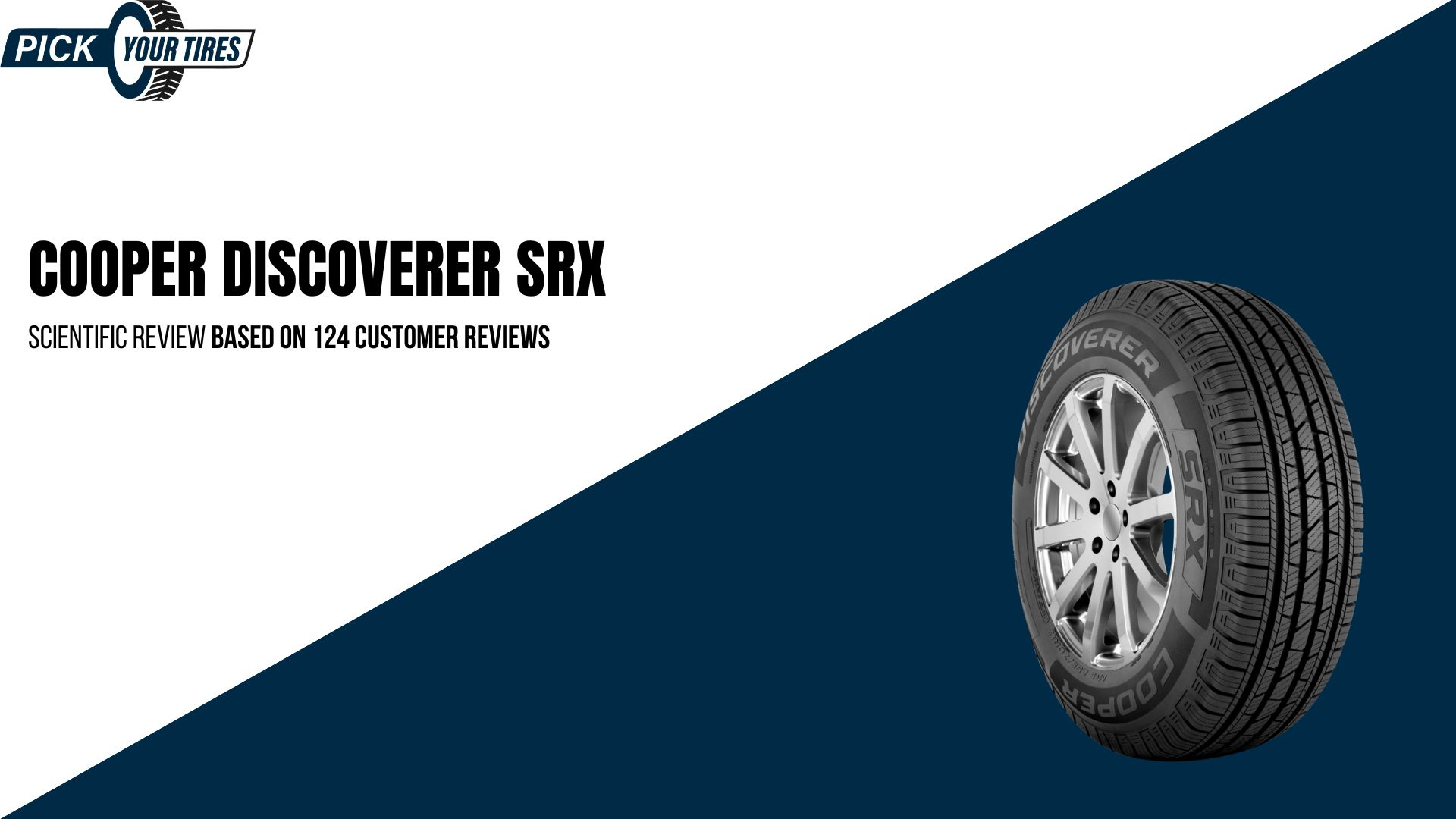
The Cooper Discoverer SRX got a TireScore rating of 8.4 which is well above the average score of all the all-season tires we have reviewed. It performs exceptionally well in dry conditions and really well on wet surfaces. It also handles snow pretty well for an all-season tire.
Pros
- Outstanding dry and wet traction
- Smooth, comfortable ride in early lifespan
- Good light snow performance for an all-season tire
- Stable handling and cornering
Cons
- Increased noise as tread wears
- Inconsistent treadwear reports (some premature wear cases)
- Struggles in deep snow and icy conditions compared to winter tires
Last Updated on January 3, 2026 by Tom
The Cooper Discoverer SRX usually gets fitted during a service visit already booked for rotation or alignment, and the vehicle goes back into the same cycle of starts, stops, merges, and long steady miles.
Service notes tend to mention the swap during routine maintenance rather than after a breakdown. Alignment checks, rotation intervals, and depth measurements guide the decision, and the SRX takes over the same routes the vehicle has already memorized, from supermarket parking lots to long, steady highway stretches.
Early mileage does not draw much attention. Steering response feels settled, the vehicle tracks straight, and there is little adjustment required from the driver during daily operation. That baseline tends to hold through the initial service window. The tire begins to reveal more of its behavior only after repeated exposure to the same road surfaces under varying temperatures and load conditions.
This review reflects those longer-term patterns drawn from customer reports and service observations rather than short-term impressions.
Cooper Discoverer SRX Main Specs
Category:
Crossover/SUV touring all-season
Vehicle type:
SUVs, crossovers, light trucks (and some vans)
Available sizes:
~16″–20″
Speed rating:
Mix of T, H, V (varies by size)
UTQG:
~700 A A – 740 A A/B (varies by size)
The Discoverer SRX usually ends up under SUVs and crossovers that leave the driveway every morning and point toward the same roads. School traffic, work commutes, fuel stops, then long stretches where the speed settles and stays there.
As passengers climb in and cargo shifts around the boot, the tire keeps its shape on the road, showing itself during lane changes, on sweeping on-ramps, and through steady highway curves where the wheel stays turned just a few degrees for miles at a time.
Across normal driving, the tread keeps contact predictable. The grooves move water away during rain, and the siping keeps the surface engaged when roads stay damp after storms.
Owners usually notice this during wet on-ramps or braking zones near intersections, where the vehicle tracks cleanly and continues on its line. Regular alignment checks and air pressure adjustments tend to show their payoff at service visits, where wear appears spread evenly across the tread face.
Our Cooper Discoverer SRX Review is Based on 124 Verified User Reviews.
We believe that our method – collecting real customer reviews from trusted sources, then analyzing them using a combination of manual and AI-supported semi-automatic steps – is the ideal way to produce unbiased reviews.
For all-season tire reviews TireScore is a weighted mix as follows: Dry 25%, Wet 25%, Snow 20%, Comfort & Noise 15% and Treadwear 15%. The result is a number you can trust – based on real world data, analyzed and evaluated with no bias.
Across customer feedback and shop data, the Discoverer SRX maintains predictable behavior through most of its service life. Dry-road stability and wet-weather control are consistently noted, especially during the first half of tread depth. Highway ride quality remains smooth during early mileage, with minimal vibration or steering correction required.
Snow performance varies by condition. Light accumulation and slush remain manageable, while deeper snow and ice expose reduced grip and longer stopping distances. Noise behavior changes with mileage, becoming more noticeable as tread depth drops and surface texture interacts with wear patterns.
Despite variability in longevity reports, overall sentiment remains steady among drivers using the tire for daily road-focused driving.
Dry Performance Score: 9.1 / 10
On dry pavement, the Discoverer SRX maintains linear contact through the contact patch. Steering input translates predictably, with no abrupt response during lane changes or highway merges. The tire tracks straight at speed and does not require frequent correction unless alignment has already shifted.
Cornering behavior stays neutral at typical road speeds. There is no early shoulder collapse, and braking response remains consistent across routine stops. Service logs do not show unusual dry-road instability during early or mid-life stages.
Miles add up quietly, and the steering response changes in small ways that are easy to miss day to day. On cars with older struts or bushings, the wheel needs a touch more input during lane changes and roundabouts, the front end taking an extra moment to settle. Most drivers notice it while correcting mid-corner or lining up for a parking space, then keep driving, logging weeks before the shift becomes part of how the car feels.
Tip: The Cooper Endeavor Plus is another all-season tire from Cooper that is a great choice in dry conditions.
“It feels like the truck handles better than stock, especially in dry weather.“
“The tires hold the road really well. Even when I push it a little around curves, there’s no squirming or instability.“
Wet Performance Score: 8.8 / 10
Wet-road stability is one of the SRX’s stronger traits. The tread clears water effectively during highway travel, maintaining directional control in steady rain. Braking distances remain consistent when tread depth stays above mid-life levels.
Some drivers report minor fuel economy changes after installation, which service notes often associate with tread design rather than mechanical fault. These reports appear intermittently and do not dominate overall feedback.
As tread depth decreases, hydroplane resistance narrows, particularly on smooth or newly paved surfaces. This behavior aligns with expected all-season wear progression.
Tip: Interested in the all-season tire that performs best in rain? Check out our review of the Michelin CrossClimate 2.
I’ve driven through thunderstorms where other cars were slowing down, and I didn’t have any trouble with these tires. They channel water well.
Winter & Snow Traction Score: 7.3 / 10
Cold weather use shows up first in everyday movement. Pulling away from a stop in light snow or slush, the Discoverer SRX keeps the vehicle moving cleanly, especially on AWD setups where torque spreads out and wheelspin stays brief. Braking from neighborhood speeds feels measured, with the tire slowing the vehicle in a straight line rather than skating across the surface.
As snow deepens or ice settles in, limits become easier to spot. Stops take more space, steering inputs need earlier timing, and front-drive vehicles show the change sooner when weight shifts forward. These moments tend to line up with colder mornings and packed surfaces rather than sudden changes in the tire itself.
Drivers in areas with occasional winter weather usually keep the SRX mounted and adjust speed and spacing as conditions shift. In places where snow stays on the road for weeks at a time, many service records show a seasonal swap once temperatures drop and surfaces stop clearing between storms.
“These tires performed extremely well during a very snowy winter in Northern Nevada. I didn’t get stuck once, even in medium to heavy snow.“
“These tires just do a poor job of stopping in snow. The front tires slide through light turns, some of the worst performing all-seasons I’ve ever owned in snow.“
Comfort & Noise Score: 8.4 / 10
During the early stretch of ownership, the SRX rides through daily routes in a predictable way. Small cracks in the road, patched sections near intersections, and expansion joints on overpasses register through the suspension, though the cabin stays free of sharp jolts or abrupt shocks that force a grip change on the wheel.
Sound stays low during this period. Highway lanes roll by with tire noise sitting under engine hum and airflow, noticeable only when the radio drops between stations or traffic slows near on-ramps. As miles accumulate, certain surfaces begin to speak up, concrete stretches on commuter highways, rough asphalt near industrial areas, the sound appearing in familiar places rather than all at once.
By later service intervals, that road noise becomes the detail most owners mention during inspections, especially in vehicles with lighter sound insulation.
Tip: Great comfort and low noise are priorities for you? Check out the Michelin Defender 2 review.
❞
They started quiet, but at about 20,000 miles they became louder than expected, especially on concrete.
Treadwear & Longevity Score: 8.2 / 10
Treadwear shows up differently once miles start stacking on a specific vehicle. A crossover running daily errands with rotations done on schedule often carries usable depth past 50,000 miles, checked during oil changes and brake inspections.
Vehicles that see harder acceleration, higher curb weight, or skipped rotations reach the wear bars sooner, sometimes before 30,000 miles, usually noticed when steering feel changes or road noise rises during familiar drives. A few setups stretch close to the warranty figure, confirmed by tread gauges rather than expectations. Decisions tend to happen in the service bay, looking at depth numbers and scheduling the next set.
Service notes link these outcomes to alignment drift, vehicle weight, and rotation intervals rather than compound failure. When maintained consistently, wear tends to progress evenly across the tread surface, with shoulder wear emerging first as alignment begins to shift.
“These tires are about 3/4 worn out after 51,000 miles and have maintained good performance the whole time.“
“I’m disappointed in the tread life. I rotated them every 5K, but they were at 4/32 after 40K miles.“
Who Is This Tire For?
The same character shows itself during normal use. A short drive to the shops, a crawl through traffic, then a stretch where speed settles and the wheel stays straight. Early miles pass with little interruption. The radio stays where it was set, voices carry through the cabin, and nothing pulls focus away from the road ahead.
After weeks on the same routes, certain surfaces start making themselves known. Rough tar outside the school gate adds a low texture. Concrete near the highway entrance carries a faint tone for a few seconds. Lane changes, mirrors, braking points, and traffic flow take over again, and the sound drops back out of awareness as the drive continues.
How long do Cooper Discoverer SRX tires last?
They’re backed by a 75,000-mile treadwear warranty, and real-world life depends a lot on rotations and alignment.
Are Cooper Discoverer SRX tires good in snow?
They’re generally good in light snow, but ice traction is more hit-or-miss.
Are they quiet?
Yes—comfort and low noise are a core selling point, and reviews commonly rate them as quiet and smooth.
How do they perform in rain?
Wet grip is a strong area, with high review ratings for wet traction and hydroplaning resistance.