
Last Updated on February 27, 2026 by Tom
You’ve got more than one type of road under your tires. Highways that stretch across states. City streets with stop-start traffic. Gravel backroads that flood after a storm. The surface changes, and so do the demands on your vehicle.
All season vs all terrain tires is not a minor choice. Both are built for year-round use, yet they serve very different driving needs. One favors comfort and efficiency on clean pavement. The other favors traction and durability when roads break apart or disappear.
Many drivers search for all season vs all terrain tires without a clear sense of what truly separates them. The answer comes down to tread design, rubber compound, road surface, and how often you leave pavement behind.
What Is the Difference Between All Season and All Terrain Tires?
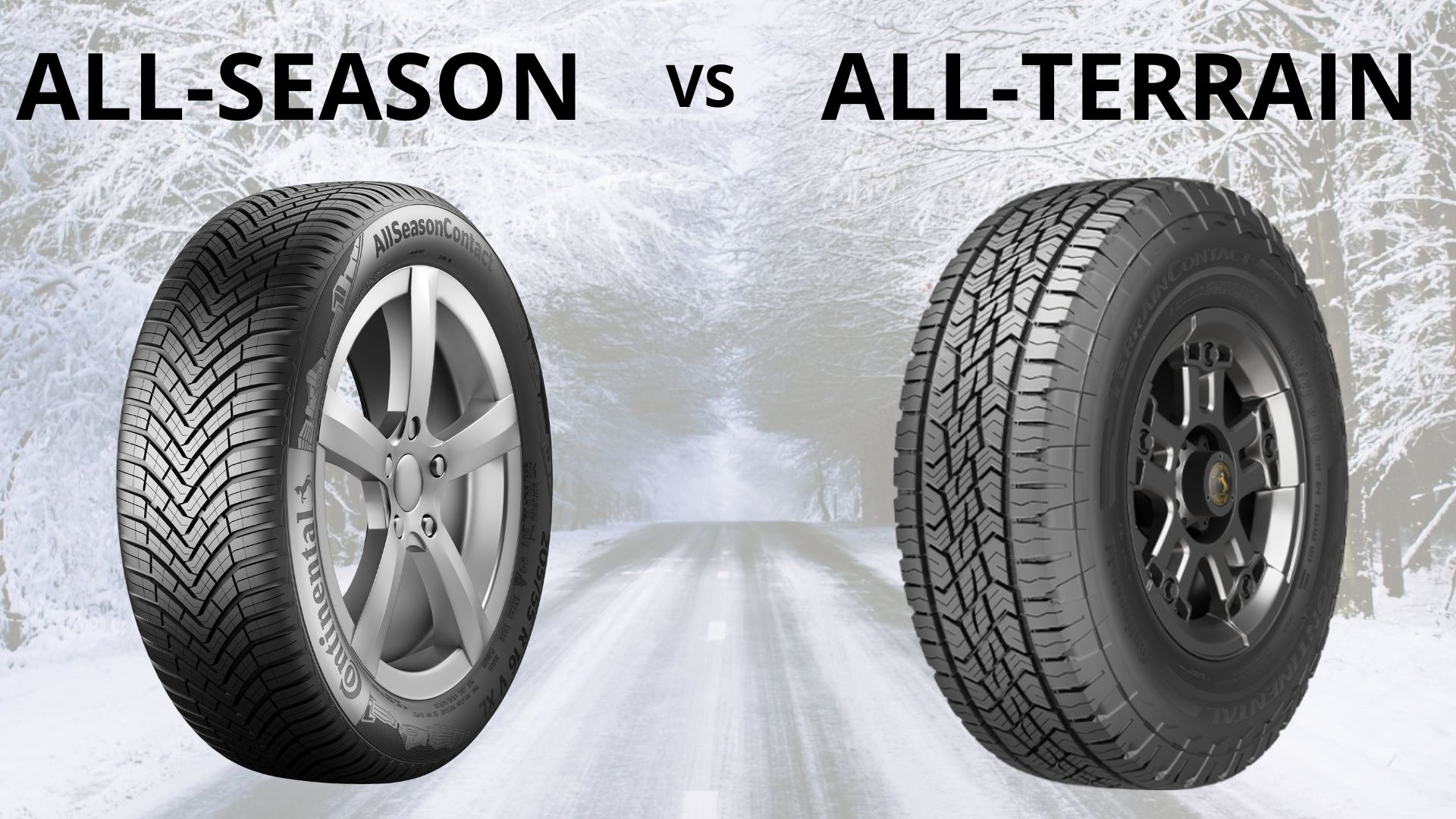
When comparing all terrain tires vs all season tires, the separation is practical rather than cosmetic. Below is a clear breakdown of how they differ across real driving conditions.
| Feature | All Season Tires | All Terrain Tires |
|---|---|---|
| Primary Purpose | Daily paved-road driving | Mixed driving including dirt, gravel, and rough surfaces |
| Tread Design | Tighter tread pattern for water evacuation and smooth ride | Larger, deeper tread blocks for grip on loose surfaces |
| Ride Comfort | Quiet and smooth on highways | Louder with firmer ride feel |
| Fuel Economy | Better MPG due to lower rolling resistance | Slight drop in MPG due to heavier build and aggressive tread |
| Snow Performance | Handles light snow and cold mornings | Better traction in deeper snow, especially winter-rated models |
| Off-Road Capability | Limited to well-maintained roads | Built for trails, mud, and uneven ground |
| Sidewall Strength | Standard construction | Reinforced for durability and puncture resistance |
| Vehicle Type | Sedans, crossovers, compact SUVs | Trucks, work vehicles, larger SUVs |
| Long-Term Wear | Even wear on pavement | Durable under mixed terrain use |
All terrain vs all season tires becomes easier to decide once you look at how and where you drive most often. If pavement covers nearly every mile, all season tires stay efficient and comfortable. If loose gravel, job sites, or backcountry access roads appear weekly, all terrain tires provide grip and resilience that standard tires cannot match.
Where All-Season Tires Make Sense in the U.S.
If most of your miles stay on pavement, all season vs all terrain tires becomes a straightforward decision. All-season tires are built for predictable surfaces. They perform best on highways, city streets, and well-maintained suburban roads.
Think suburban Atlanta, the highways outside Phoenix, or downtown Nashville. Roads remain clean for most of the year. Snow is light and short-lived. Rain appears, but rarely overwhelms drainage systems. Under these conditions, all season tires vs all terrain makes sense in favor of all-season.
Most sedans, crossovers, and compact SUVs leave the factory with all-season tires. That choice reflects performance balance rather than cost alone. The tread clears water efficiently and keeps road noise low. The rubber compound stays flexible across moderate temperature shifts but can lose grip once temperatures drop well below freezing.
Fuel economy also plays a role. All season tires vs all terrain tires often shows a measurable difference in MPG. Lower rolling resistance means:
- Better highway fuel efficiency
- Less engine strain over long distances
- Reduced tire wear on smooth pavement
- Quieter cabin experience at higher speeds
Drivers who spend their weeks commuting, running errands, or covering interstate miles rarely benefit from the added weight of all terrain tires. The tighter tread design provides stability during sudden braking and lane changes. Steering response feels more precise on asphalt.
All terrain tires vs all season tires only becomes necessary when pavement stops being the primary surface. If your routes rarely include gravel, mud, or unpaved access roads, all season tires deliver comfort and reliability without extra bulk.
When All-Terrain Tires Make More Sense
The conversation around all season vs all terrain tires shifts the moment pavement is no longer guaranteed. If your weekly routine includes construction zones, rural access roads, farmland paths, or trailheads, all terrain tires begin to justify their build.
All terrain tires vs all season tires differ most in tread depth and spacing. The larger tread blocks dig into loose surfaces instead of sliding across them. Gravel, packed dirt, and shallow mud demand that extra grip. Standard all season tires struggle once the surface becomes uneven or unstable.
Sidewall strength is another major difference. All terrain vs all season tires matters when rocks, debris, or rutted roads enter the picture. Reinforced sidewalls absorb impact and resist punctures that would damage standard road-focused tires.
Drivers who benefit most from all terrain tires include:
- Truck owners who tow equipment or trailers
- SUV drivers who access job sites or unpaved properties
- Outdoor enthusiasts who travel to campsites, boat launches, or hunting grounds
- Rural residents with seasonal flooding or washed-out roads
Highway performance remains acceptable. Many drivers complete long interstate trips on all terrain tires without issue. Road noise increases, especially on older pavement, and fuel efficiency drops slightly due to heavier construction and deeper tread. The trade-off favors durability and control rather than comfort alone.
All terrain tires vs all season in snow also shows a difference. The aggressive tread pattern helps maintain traction in deeper snow compared to standard all-season models. Still, neither category replaces a dedicated winter tire in severe ice conditions.
All season tires vs all terrain becomes less about brand preference and more about terrain exposure. If pavement covers nearly every mile, all season remains practical. If loose surfaces appear regularly, all terrain provides grip and resilience that pavement-focused tires cannot match.
All Terrain Tires vs All Season in Snow
Snow exposes the practical differences in all season vs all terrain tires more clearly than dry pavement ever will. While both categories are marketed for year-round use, their behavior changes once temperatures drop and roads turn white.
All season tires are built for moderate winter exposure. They handle light snowfall, cold rain, and early morning frost without major issues. The rubber compound stays flexible in cool conditions, but it stiffens as temperatures drop further. Traction decreases on packed snow and ice.
All terrain tires vs all season in snow becomes more noticeable when accumulation increases. Deeper tread blocks and wider voids allow all terrain tires to dig into snow instead of sliding over it. Some models are winter rated and carry the Three Peak Mountain Snowflake symbol, which indicates verified snow traction testing.
Below is a clear breakdown of how both tire types compare in winter conditions.
Snow Performance Comparison
| Condition | All Season Tires | All Terrain Tires |
|---|---|---|
| Light Snow | Stable and predictable | Strong grip with added tread bite |
| Moderate Snow | Grip begins to decline | Better traction due to deeper tread |
| Packed Snow | Reduced control under braking | More consistent traction |
| Ice | Limited grip | Limited grip unless winter rated |
| Winter Certification | Rare | Available on select models |
The presence of a winter rating makes a difference. Not all all terrain tires qualify. Standard all terrain models without winter certification may perform similarly to all season tires once ice enters the picture.
Snow Depth and Driving Environment
| Scenario | Better Option |
|---|---|
| Southern winter with occasional snowfall | All Season |
| Rural roads with regular snow coverage | Winter Rated All Terrain |
| Mountain regions with frequent accumulation | Dedicated Winter Tire |
| Urban driving with plowed roads | All Season |
All terrain vs all season tires in snow depends on how often you drive through accumulation versus cleared pavement. In northern Michigan or higher elevations of Colorado, deeper tread and winter-rated compounds offer better control. In cities where snow is cleared quickly, the added weight of all terrain tires may not justify the switch.
Neither all season nor all terrain tires replace a true winter tire in severe ice conditions. The rubber compound of a dedicated snow tire remains softer in extreme cold, which improves braking and steering.
Snow changes the equation, but terrain exposure still matters. Drivers who deal with both snow and unpaved roads often benefit most from winter-rated all terrain tires. Drivers who remain on maintained pavement through mild winters usually find all season tires sufficient.
All Weather Tires vs All Terrain Tires
All weather tires vs all terrain tires often creates confusion because both sound capable in harsh conditions. Their purpose, however, differs in a key way. All weather tires focus on year-round road performance with verified winter traction. All terrain tires focus on durability and grip beyond pavement.
All weather tires sit between all season and winter tires. They carry the Three Peak Mountain Snowflake symbol and use a rubber compound that remains flexible in colder temperatures. Their tread pattern balances wet, dry, and snow performance while maintaining a smoother ride on highways.
All terrain tires vs all weather shifts the decision toward terrain exposure rather than temperature alone. If loose gravel, mud, or uneven job sites appear regularly, all terrain tires provide stronger sidewalls and deeper tread for protection and traction. If winter traction matters more than off-road durability, all weather tires may be the better match.
Below is a direct comparison of how both categories differ.
All Weather Tires vs All Terrain Tires Comparison
| Feature | All Weather Tires | All Terrain Tires |
|---|---|---|
| Primary Focus | Year-round road use with snow certification | Mixed surface durability and traction |
| Winter Rating | Yes, 3PMSF certified | Only on select winter-rated models |
| Off-Road Capability | Limited | Strong traction on dirt and gravel |
| Ride Comfort | Closer to all season feel | Firmer ride with more road noise |
| Fuel Economy | Similar to all season | Slight reduction due to aggressive tread |
| Sidewall Strength | Standard | Reinforced construction |
Which One Makes More Sense?
| Driving Pattern | Better Choice |
|---|---|
| Urban driving with snowy winters | All Weather |
| Rural access roads with mud and gravel | All Terrain |
| Highway commuting with occasional snow | All Weather |
| Job sites and mixed terrain year-round | All Terrain |
All season vs all terrain often centers on comfort versus durability. All weather tires introduce another layer by addressing snow without committing to full off-road strength.
Drivers who remain on pavement but want stronger winter confidence tend to prefer all weather tires. Drivers who divide their time between highways and rough surfaces lean toward all terrain models.
Regional Tire Realities Across the U.S.
Road surface and climate vary widely across the country. All season vs all terrain tires often depend less on brand and more on geography. Snow frequency, road maintenance, and how often pavement gives way to gravel all influence the right choice.
Below is a clearer breakdown based on driving patterns seen across different U.S. regions.
Tire Choice by Region
| Region Type | Common Road Conditions | Winter Severity | Typical Driving Pattern | Recommended Tire Type |
|---|---|---|---|---|
| Major Metro Areas such as Houston, Los Angeles, Charlotte | Clean pavement, maintained highways | Mild to light snow | Daily commuting, highway miles | All Season |
| Southern and Coastal States | Warm climate, limited frost | Rare snow events | City driving and long interstate travel | All Season |
| Snow Belt Regions such as Northern Michigan, Upstate New York | Snow-covered roads for extended periods | Moderate to heavy snow | Mixed city and rural travel | Winter Rated All Terrain or Dedicated Winter Tire |
| Mountain Regions such as Colorado Rockies | Elevation changes, packed snow | Frequent snowfall | Steep grades, rural access | Winter Rated All Terrain |
| Rural Agricultural Areas such as Arkansas, West Texas, Inland Oregon | Gravel roads, seasonal mud, uneven terrain | Light to moderate snow | Work vehicles and mixed terrain | All Terrain |
| Suburban Areas with Occasional Dirt Roads | Mostly pavement with some unpaved access | Mild winter | Daily driving with occasional off-road | All Season or Light All Terrain |
All terrain tires vs all season tires becomes clearer when viewed regionally. Drivers in cities with steady road maintenance rarely benefit from aggressive tread. Drivers who deal with gravel roads, farmland paths, or mountain routes gain traction and durability from all terrain models.
Climate alone does not decide the outcome. Surface condition matters just as much. A snow-free rural county may still require all terrain tires due to unpaved roads. A snowy metro area with constant plowing may still suit all season tires.
What U.S. Tire Brands Recommend?
Major tire brands shape their guidance around real driving conditions rather than labels alone. The debate around all season vs all terrain tires usually comes back to how and where the vehicle is used.
BFGoodrich builds many of its all terrain models for mixed surface durability. Testing focuses on highway stability along with gravel and trail performance. The goal is strength without excessive road noise.
Goodyear often points out that even occasional off-pavement driving can justify all terrain tires. Dirt access roads, construction zones, and rural routes place stress on standard all season tread patterns.
Tire Rack takes a more usage-based approach. Drivers who remain on paved roads and face mild winters are typically directed toward all season tires. The recommendation shifts toward all terrain models when terrain exposure becomes regular rather than occasional.
Across manufacturers, the pattern stays consistent:
- All season tires suit pavement-focused drivers
- All terrain tires suit mixed terrain and heavier vehicles
- Winter-rated models matter more in snow-prone states
All terrain tires vs all season tires is less about branding and more about matching the tire to the road conditions you face most often.
FAQs
All season tires focus on paved-road comfort, fuel efficiency, and balanced wet and dry traction. All terrain tires use deeper tread blocks and reinforced construction for dirt, gravel, and uneven surfaces. The main difference is surface priority. All season favors pavement. All terrain favors mixed terrain durability.
All terrain tires vs all season in snow depends on conditions. In light snow, both perform similarly. In deeper or packed snow, all terrain tires often provide better traction due to larger tread blocks. Winter-rated all terrain models perform even better. Neither replaces a dedicated winter tire in icy conditions.
Yes, though the difference is usually modest. All terrain tires are heavier and create more rolling resistance because of their aggressive tread design. This leads to a slight drop in MPG compared to all season tires.
Yes. Many drivers use all terrain tires for long interstate travel. Expect more road noise and a firmer ride compared to all season tires. Stability and safety remain strong when the tire is properly rated for the vehicle.
For drivers who stay on paved roads and experience mild winters, all season tires handle daily commuting, highway travel, and light snow without issue. They remain the most practical option for urban and suburban driving.
The Road Makes the Final Decision
Road conditions change, and tire choice should reflect what you face most often.
All season vs all terrain tires comes down to surface exposure. If your routine centers on highways, city streets, and daily commuting, all season tires deliver comfort, efficiency, and steady traction.
If gravel roads, job sites, or uneven terrain appear regularly, all terrain tires provide stronger grip and added durability. You give up some cabin quiet and a bit of fuel economy in return for control beyond pavement.
Snow can shift the balance, but terrain remains the key factor. Choose the tire that matches your weekly driving conditions, not the one that simply looks tougher.